
Manitowoc County Deed Types
A deed is a recorded instrument that conveys an interest in land. The Register of Deeds index comes first. In Manitowoc County, that index is the natural starting point for finding one. The portal's full document-type menu is not spelled out here. The deed forms listed below appear in county property records. That is not a promise of a separate search button for each. Read the instrument and its legal description before deciding what actually passed.
| Deed Type | What It Does | Common Use |
|---|---|---|
| Warranty deed | Conveys the described interest with deed warranties | Ordinary transfer review |
| Quitclaim deed | Transfers whatever interest the signer holds | Follow an interest change or correction |
| Trustee’s deed | Shows a trustee acting in that role | Check the trust name and authority |
| Personal-representative or executor deed | Records a transfer by an estate representative | Read with the probate file |
| Transfer-on-death deed | Records a beneficiary-based transfer direction | Check later deed or revocation records |
Not every recorded item is a deed. A mortgage, for instance, secures debt against the property rather than transferring it. An assignment moves the mortgage to a new holder. A satisfaction or release records its discharge. Easements, covenants, restrictions, liens, and plats sit in the index beside ownership instruments. A thorough deed search does not stop at the newest transfer.
1987 Manitowoc County Deed Index
The online Register of Deeds index opens on February 4, 1987, according to the county GIS records gallery. It receives nightly uploads. Guest search is available. A member login is also offered, and the gallery lists 920-683-4010 for account access. The live search form is dynamic. Its field labels and document-type choices can shift. Image charges and certified-copy fees are best confirmed with the office. Use the portal to locate a record, then verify access and price directly.
The Register of Deeds sits in Room 107 of the courthouse at 1010 S. 8th Street in Manitowoc. Hours run Monday 8:30 a.m. to 5 p.m. Tuesday through Friday, they are 8:30 a.m. to 4:30 p.m. Real-estate documents are recorded daily from 8:30 a.m. to 4 p.m. The office does not draft deeds or give legal advice. Any deed submitted for recording must be accompanied by a completed Wisconsin Electronic Real Estate Transfer Return. Its printed receipt must be attached to the original instrument.
Open the Manitowoc County LandWeb search to reach the current index. The portal entry point displays the recorded-document search.
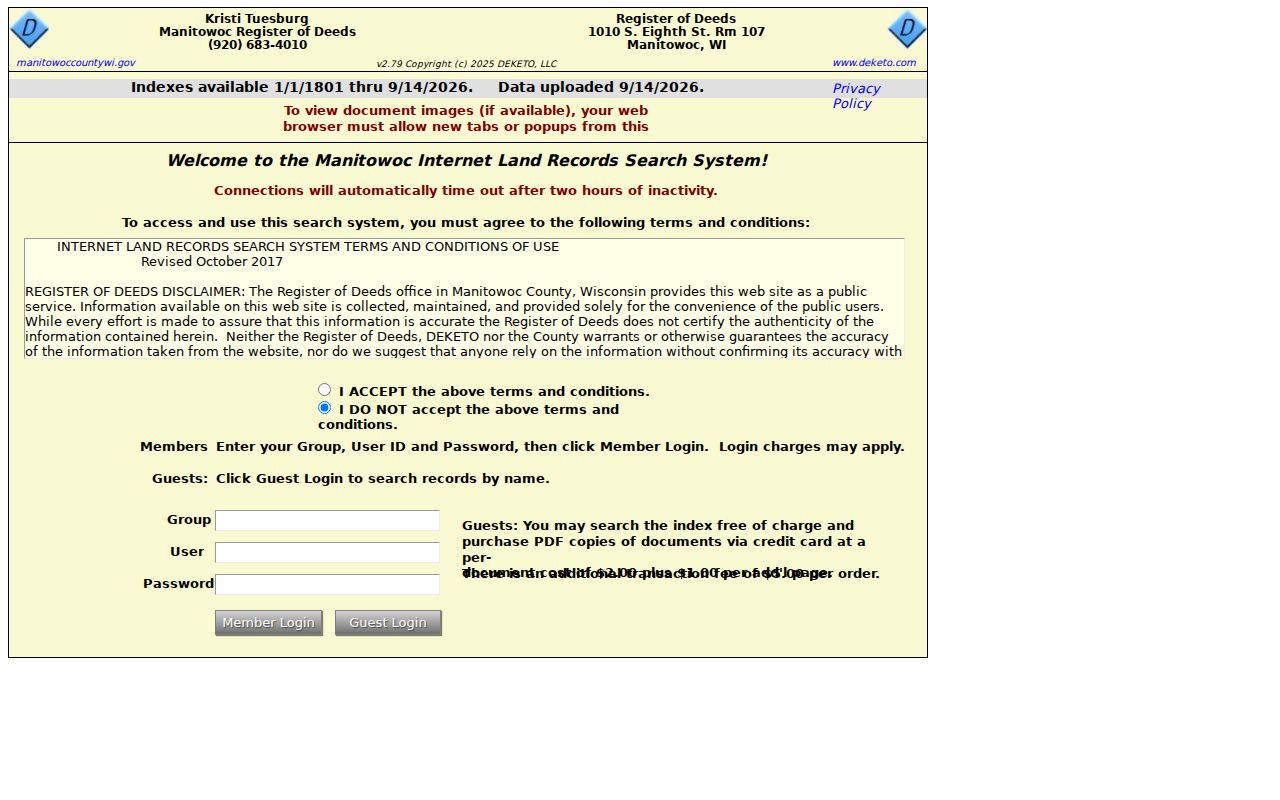
When a result has no usable image, take its reference to Room 107 or call the office before visiting to ask about the copy route.
Manitowoc County Tract Books
The online index cutoff does not end the older land trail. The Register of Deeds links a Tract Index and Certified Survey Map viewer holding scanned tract-index books and CSMs. The earliest physical deed-book year and exact scan coverage are not pinned down, so a search before 1987 may need help from the Register of Deeds. Start with the current deed's legal description, parcel ID, and prior instrument reference. Those details can connect a modern parcel to a tract or survey record even when an old street address has changed.
Manitowoc Public Library offers a historical fallback. Its local-history holdings include county plat books, local directories, newspapers on microfilm back to the 1850s, and census material. These can identify an earlier name or address. Only the deed book or recorded survey answers the land-record question, though. If the parcel was split or combined, compare the CSM and later documents rather than assuming the old tract line matches the current tax polygon.
The county-linked tract-index and CSM viewer is a separate land-record resource. Its pages show the scanned-book and survey-map route.
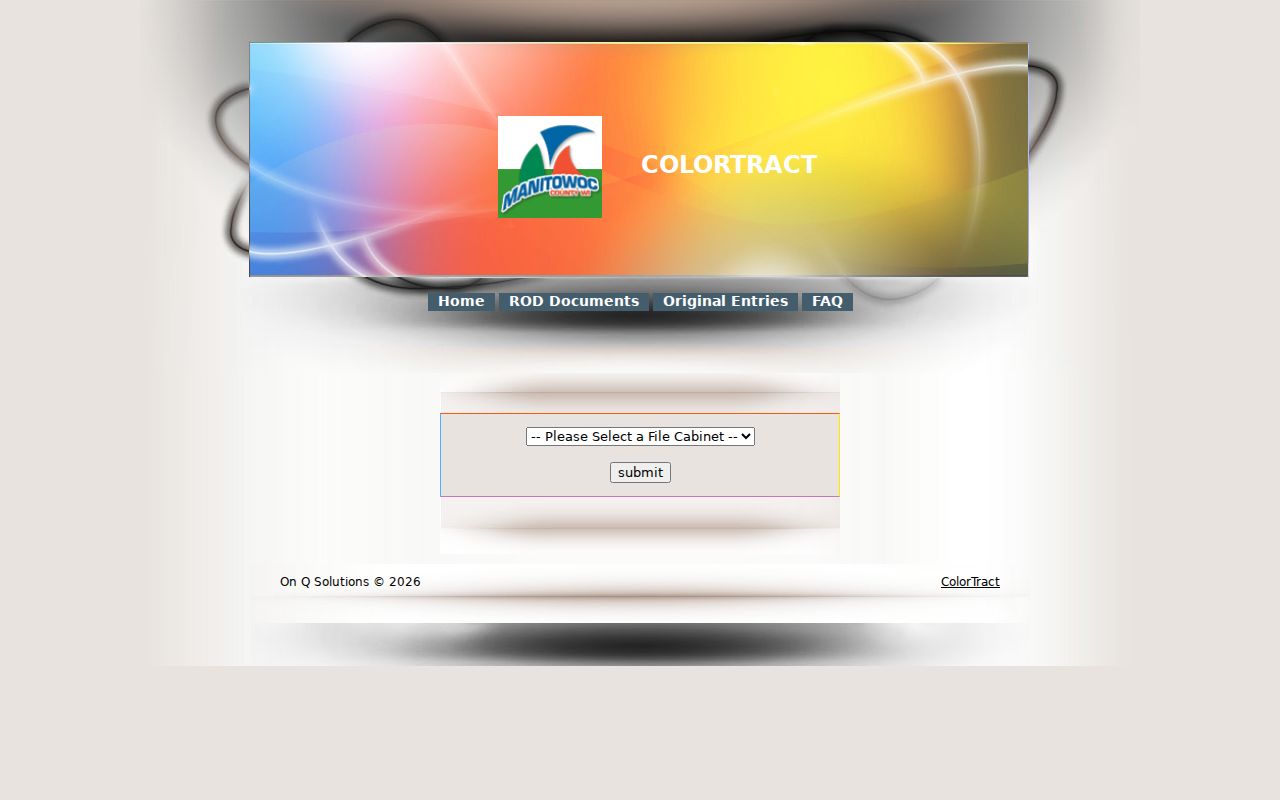
Ask the Register of Deeds which older volume to inspect whenever the online index cannot carry the chain back any farther.
Grantor and Grantee in LandWeb
Party names on a deed offer a path through the Manitowoc County index. If the portal permits party search, locate a known transfer. Then read the recorded instrument for its grantor, grantee, legal description, and recording reference. Do not assume a particular instrument-number or book-and-page box exists. Search the name and parcel in the interface currently available. Confirm any uncertain result at the courthouse.
- Find the deed that names the present grantee and match its legal description to the parcel being researched.
- Read the grantor on that instrument; that party is the prior link to test.
- Search that prior party as a grantee to locate the deed by which the party acquired the land.
- Repeat with each earlier grantor, recording the date, instrument reference, and legal description at every step.
- Stop at the online cutoff and use the tract books, deed volumes, or office guidance for older transfers.
- Grantor
- The party who conveys or releases the interest.
- Grantee
- The party who receives the conveyed interest.
- Chain of title
- The sequence of recorded transfers for the described land.
- Legal description
- The text that identifies land independently of a mailing label.
Manitowoc County Mortgage Records
A mortgage answers a different question than a deed does. The deed names the owner of record. The mortgage secures a debt. The Manitowoc County recording index tracks both side by side. An assignment shows the loan changing hands. A satisfaction or release is the paper to check. Pull it once the debt is said to be paid. Construction liens, judgment liens, tax notices, easements, covenants, and condominium records can all limit a property. They can also complicate a later sale without ever changing the owner name in Ascent.
Match every item by party, parcel, legal description, and recording reference. A judgment may surface twice. It can appear once in a circuit-court case and once as a recorded land instrument. For foreclosure or quiet-title matters, search WCCA to find the case. Then ask the Register of Deeds to inspect the lis pendens or whatever instrument followed. A court disposition and a recorded release are not the same thing. Each one lives in its own file, so check both. A good first step is the Manitowoc County property search. It converts an address into a parcel number you can carry into LandWeb.
Probate Transfers in Manitowoc County
Death changes how a title moves. A transfer after an owner dies may surface as a personal-representative or executor deed. It may also appear as a transfer-on-death deed, a revocation, or a probate order. The deed shows the recorded transfer. The estate file explains who acted and under what authority. Search WCCA for the public case entry. Then contact the Register in Probate in Room B-11 when an inventory, petition, or order is needed. Its public-record notice lists a $4 search fee for that work.
A will is a probate record, not a deed. A death certificate may support a transfer, but it cannot establish title on its own. Compare the legal description and the instrument against the parcel. Do not trust a name match alone. Estate, trust, and survivorship records can break a clean seller-to-buyer pattern in the Manitowoc County deed records. Keep each recorded step paired with its court source so the chain stays whole.
Manitowoc Deed Fraud Notices
The Register of Deeds offers free notification when a document is recorded against a subscribed name or property. Signup runs by phone at 920-683-4660. The alert is a prompt, nothing more. It will not block a recording, decide whether something is fraud, or replace reading the instrument itself. If a notice looks unfamiliar, compare its parties and legal description with your own records, then call the county office through its official contact information. The county's property-fraud alert information walks through the signup process and the phone route for enrollment.
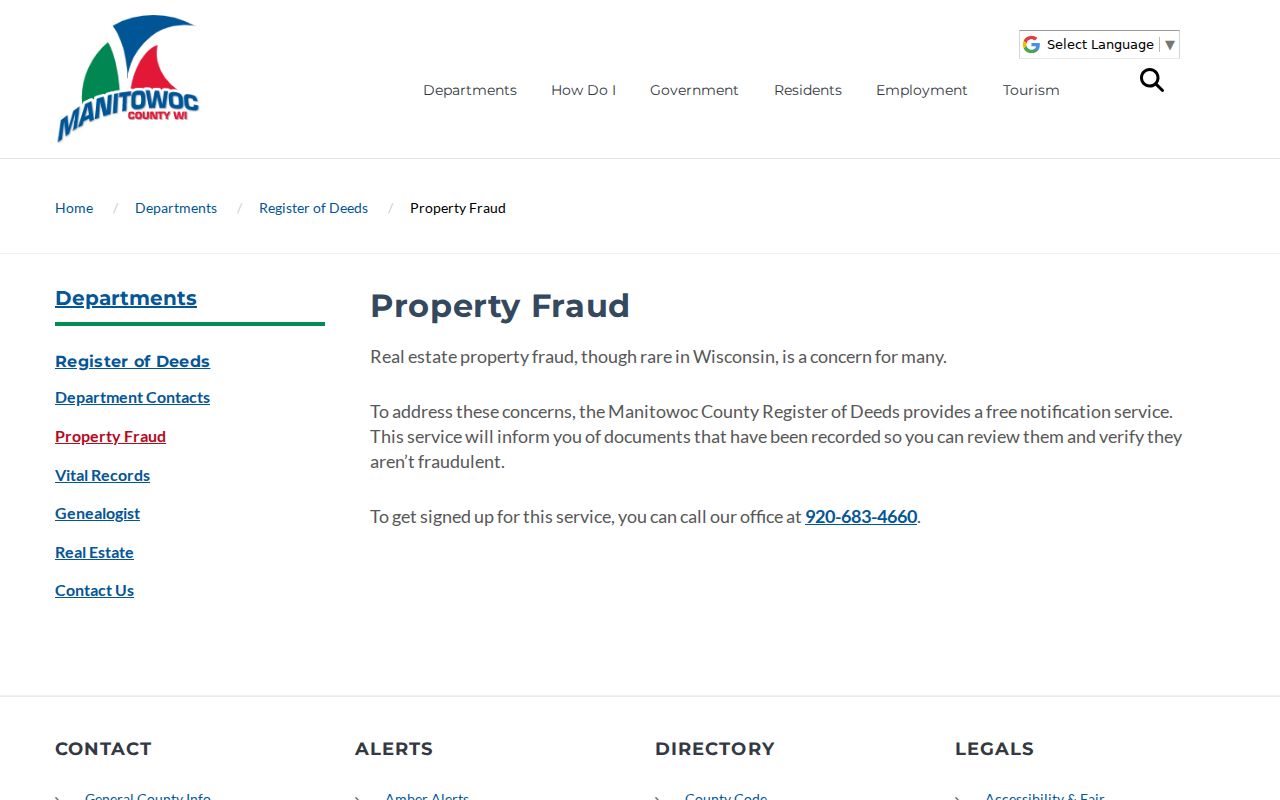
Note: Keep the alert and its instrument reference handy so the county can identify exactly which filing you want reviewed.
Requesting a Manitowoc County Deed
Once the index points to an instrument, open the image if the portal offers it. The Register of Deeds posts no online schedule for image prices or certified-copy charges, and no dedicated mail form for deed copies appears on the county site. For anything you cannot view or print yourself, call the Register of Deeds at 920-683-4012 or visit Room 107 at the courthouse. Ask whether the copy should be plain or certified. Confirm the payment method and amount before you send a request.
Recording a new deed is a separate track. The county's real-estate page lays out the recording process, the ERETR receipt requirement, and the approved e-recording providers: Simplifile, CSC, Hopdox, Indecomm, and EPN. Recording hours run daily from 8:30 a.m. to 4 p.m. The office does not prepare deeds or give legal advice. Anyone drafting a transfer should confirm the current form and submission steps with the Register of Deeds or a qualified professional.
A strong records request names the grantor or grantee, the approximate recording date, the parcel or legal description, and the instrument type if known. Those details make a reasonably specific request under Wisconsin Open Records Law easier to route. Ask again whether the copy is plain or certified, and settle any copying charge before payment goes out.
Timing matters too. LandWeb receives nightly uploads, so a same-day question about a newly delivered instrument may still need a call to the office. A missing online hit does not prove a document was never presented or recorded. If the filing is recent, give the parties, the submission date, and the property description when you call. For an older transfer, ask which tract book or deed volume may hold the reference.
Recorded, not guaranteed. The index reports instruments in the county record; it does not prove that no unrecorded interest, lien, or competing claim exists. A title search reviews the full chain and related interests.