
Finding a Manitowoc County Property Owner
Ownership research starts with a parcel match. It ends with a recorded instrument. In Ascent, search by address or an owner clue to find the tax-roll entry, then carry the owner name, parcel ID, and legal description to the Register of Deeds index. Each office holds half the answer. The Real Property Lister maintains the county roll's ownership and legal descriptions, while the Register of Deeds keeps the official record of a conveyance. A GIS map can help match land, but it is not the ownership source. The route answers a focused question. Who is named in the relevant public record? It does not establish possession. When one source is newer than another, compare dates and the document behind the entry before choosing which clue to trust.
- Search the property address or parcel in Ascent and match the site address and municipality.
- Write down the Owner(s) field, the parcel ID, the legal description, and the tax years shown.
- Search the Register of Deeds index for the latest deed tied to that parcel or grantee name.
- Compare the deed’s grantee and legal description with the assessor result, allowing for a roll update lag.
- If an entity is named, check its Wisconsin DFI record for the legal name and registered agent, while keeping in mind that DFI does not identify every owner.
When the Manitowoc Roll Lags
Manitowoc County’s assessment date is January 1. A closing later in the year can therefore be newer than the owner name on the roll, and tax-payment data also updates after municipal settlements in mid-February. Check the latest deed when a transfer is recent; do not assume that a difference between the deed and tax record means either source is false.
The tax page has another time split for the Cities of Manitowoc and Two Rivers: current tax information is not on the county site until after July 31 because those cities manage their own current-year taxes. That is a billing publication issue, not a change in the county’s deed-recording role. A good owner check keeps municipality, deed date, assessment year, and tax year in the same note.
Trusts, Estates, and Manitowoc Owners
An owner of record can be a person, trust, LLC, estate representative, or several joint owners. Ascent offers First Name and Last Name fields. An entity needs its exact legal name. A transfer after death may list a personal representative or executor as the conveying owner. The public court case can explain that authority. When the deed leaves the role unclear, search WCCA for the estate entry.
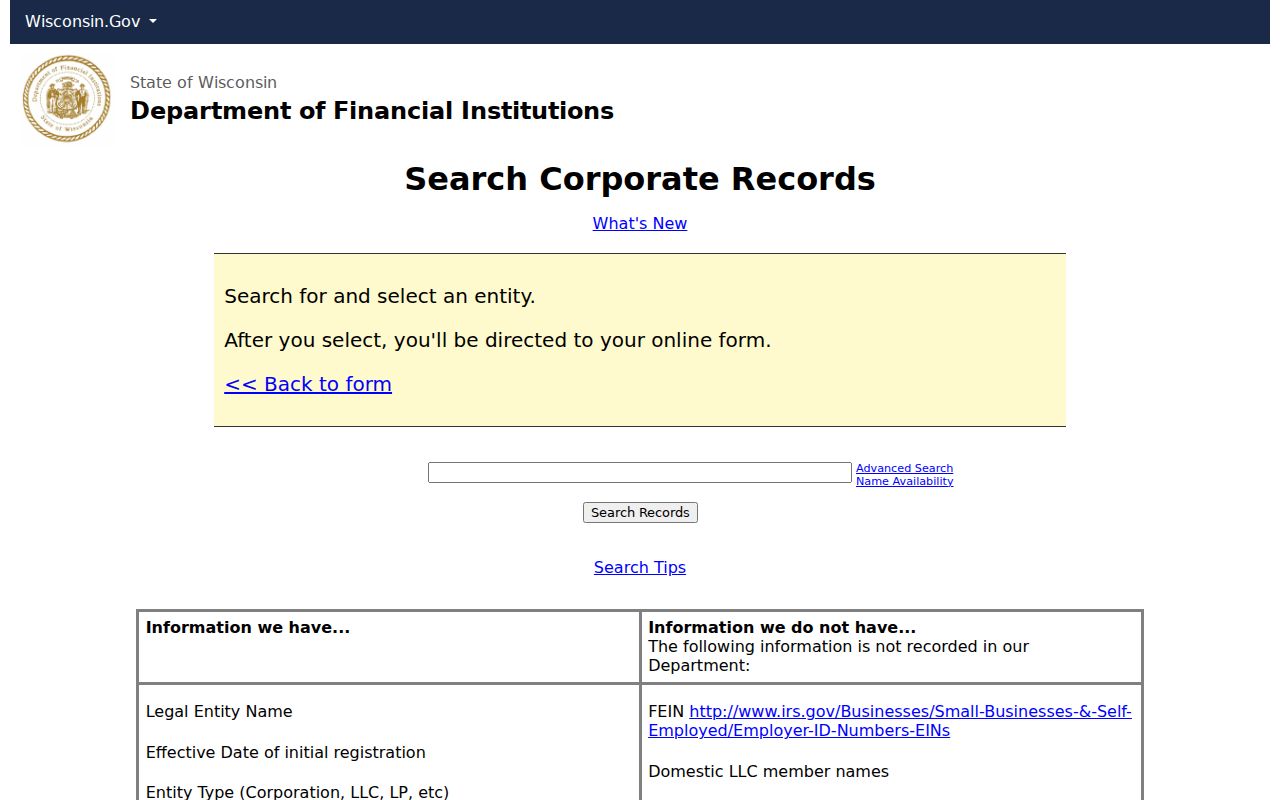
The Wisconsin DFI Corporate Records Search lists an entity's name, type, registered agent, registered office, ID, status, filing history, and annual-report year. It has real limits. Domestic LLC member names, FEINs, telephone numbers, and most sole-proprietor or trade-name records stay out of view. So the agent is not always the beneficial owner.
Use the Wisconsin DFI entity search to check the business name exactly as the deed spells it. The state's corporate-record search complements LandWeb. It does not replace it.
Probate questions go to the Register in Probate. That local court contact sits at Room B-11, and its public notice identifies a $4 search fee.
Manitowoc Owner Record Details
Ascent's result list is only the first stop. Each entry carries the labels Owner(s), Site Address, Parcel, Privacy Exp. Date, and Tax Years. Other fields wait on the parcel card. The full mailing address, sale date, assessment components, and deed reference should be verified on the live record rather than assumed. Treat Privacy Exp. Date with care. It is a database flag, not an ownership date or a public measure of who occupies the property.
If Owner(s) is not enough, compare the latest deed. Match the legal description, not just the name. Two parcels can share one owner. The index can also list one person under punctuation or middle-name variants, and a record card helps connect the sources, but the deed is the record that states what interest was conveyed.
Read the recording date, parties, and land description together. A deed can convey a stated interest yet leave prior liens or an unrecorded claim unresolved. A newer owner-reported transfer deserves a second look. Ask the Register of Deeds whether a later recording is indexed, and compare the answer against the parcel description. The tax-roll name alone cannot resolve that difference.
Reading a Manitowoc County Owner Result
Ascent labels each result Owner(s), Site Address, Parcel, Privacy Exp. Date, and Tax Years. That is a first owner clue. Each label narrows the match. The county's portal search screen is the page where visitors locate a roll entry, so open the Ascent Real Estate Tax Parcel search for the live form.
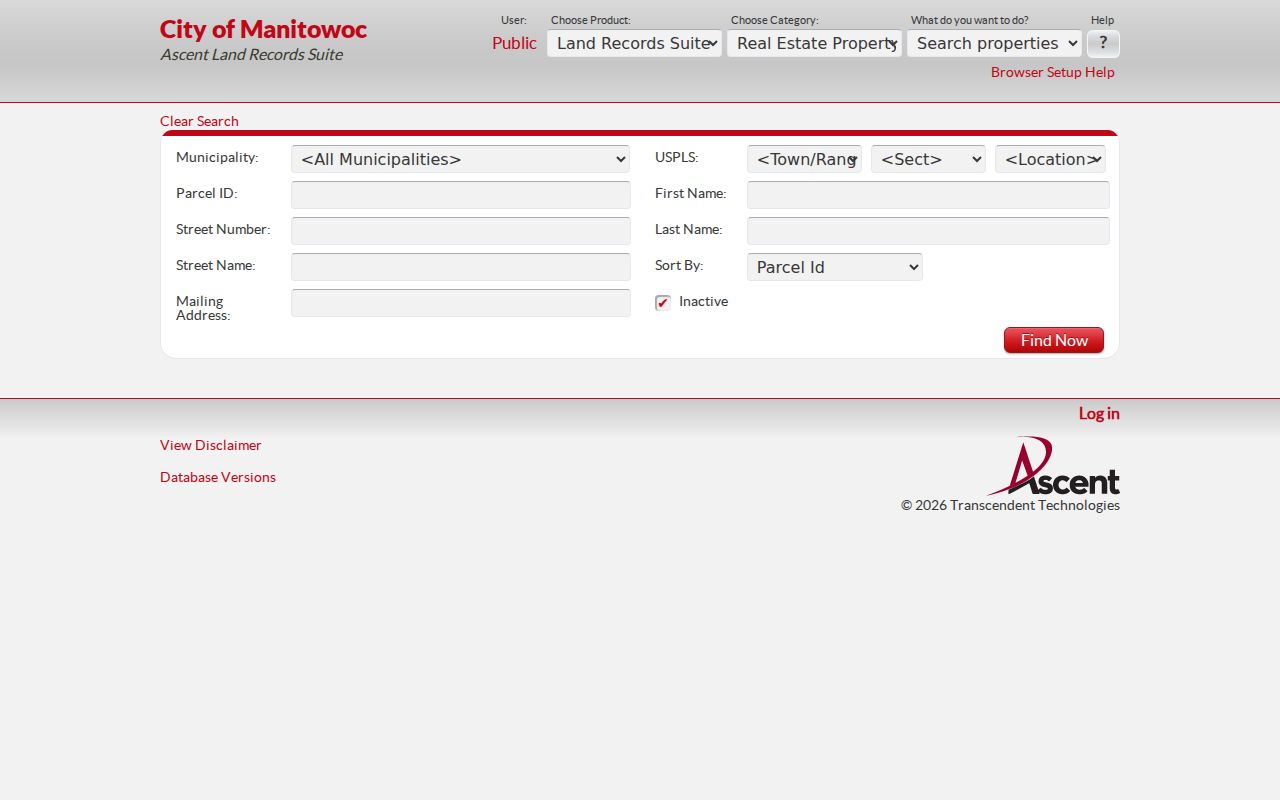
Every label on a Manitowoc County owner result answers a different question. The site address tells you where the land sits. The mailing address can differ. The parcel number ties the result to one tract of land, and the tax years show which roll the entry came from. Treat the privacy expiration date as a system flag. It says nothing about occupants or when ownership changes.
Not every field is guaranteed. Confirm anything that matters on the live record. An owner name that looks short or odd? Check the legal description and the deed grantee. If a name is hidden for privacy, do not guess from a neighboring record. Ask the custodian directly what is public.
This habit keeps two questions apart: who owns a Manitowoc County parcel, and who lives at the address. It also sharpens any later request. Include the parcel ID, the site address, the roll year, and the exact field or deed you need explained.
Where Manitowoc County Owner Information Comes From
Owner information in Manitowoc County comes from several places, each on its own timeline. The assessor's tax roll carries the owner of record for tax purposes. The Register of Deeds index lists recorded conveyances. The county parcel layer adds map context. A DFI listing can clarify a company or trust named in a deed. It is not itself a land record. Compare the source and date of each entry. Do this before treating the names as one current answer.
| Source | Owner Info It Gives | Access |
|---|---|---|
| Ascent tax-parcel record | Owner(s), site address, parcel, and tax years shown in the result list | Public county search |
| Register of Deeds | Grantee and legal description in a recorded deed | LandWeb index; older books at the office |
| Wisconsin DFI | Entity name, status, registered agent, and office | Public corporate search |
| County GIS | Tax-parcel shape and surrounding map context | GIS gallery and ArcGIS service |
Manitowoc County sources sometimes disagree. Start with their dates and legal descriptions. Ascent reflects the current tax roll. LandWeb indexes the recorded transfer. GIS supplies only the map view. A deed recorded after the roll was updated makes the roll look stale without invalidating the deed. And a matching name on a different parcel description may simply be another property the same person or entity owns.
An owner-of-record name is not an occupant list. A Manitowoc County property may sit under a trust, LLC, estate, or absentee owner. The mailing address may point elsewhere entirely. Use public property records for lawful research and civic purposes, never to approach or target a person.
Manitowoc Property-Fraud Notices
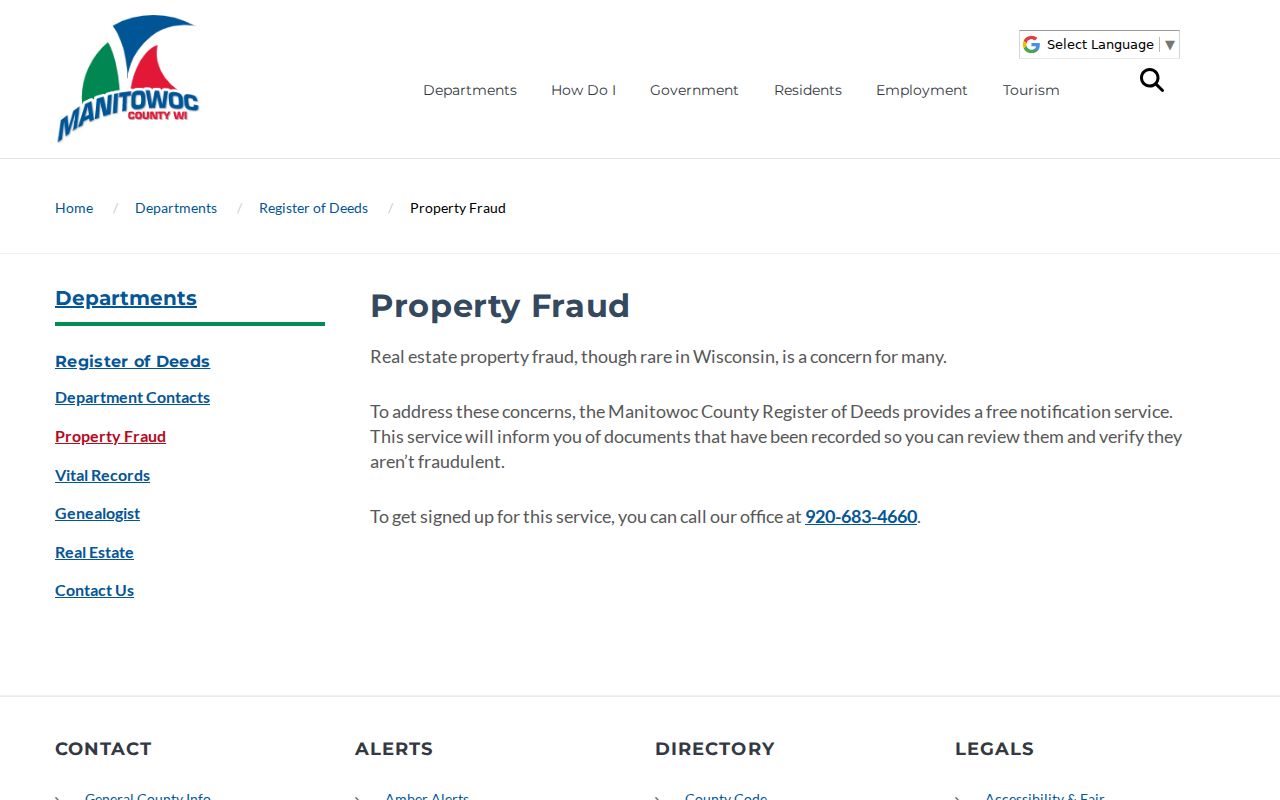
The Register of Deeds offers a free alert. It triggers when documents are recorded against a name or property you subscribe. Signup is by phone at 920-683-4660. The notice is a prompt to review a filing. It does not block a recording or decide whether fraud occurred. A notice may look unfamiliar. If so, compare its parties and legal description against your own deed records. Then call the county office through its official contact information.
The county lays out the process on its property-fraud alert page. It displays the phone signup option for the free service.
Note: The alert works as a review prompt, not a substitute for a title search or legal advice on a challenged transfer.
Limits of a Manitowoc Owner Search
A Manitowoc County owner search has real limits. A public result names the owner of record. It may not show who occupies the building. It may not show who controls an entity, or whether another interest exists. Wisconsin records law allows exemptions, and Safe at Home gives eligible participants a substitute address. Historical records are not guaranteed to vanish from every source. Do not publish sensitive details pulled from an instrument. For a legal conclusion on ownership, review the full chain of title with a professional.
Lawful use. An owner lookup is for property research, due diligence, and civic understanding. Using the information to stalk, threaten, harass, or harm anyone is prohibited.