
Former Manitowoc County Owner Records
The first job is keeping the land's identity stable. Addresses get renamed. Parcels get split, and older deeds often rely on a legal description instead of a modern street number. Begin at the newest transfer. Write down its legal description, parcel number, grantor, grantee, and recording reference before moving back another step. Then match the next link in the chain to the record source and time period that fit it best.
| Transfer date | Grantor → Grantee | Instrument | Record reference |
|---|---|---|---|
| Newest recorded transfer | Current grantee ← prior grantor | Deed type shown on instrument | LandWeb reference |
| Prior transfer | Earlier grantee ← earlier grantor | Deed or estate transfer | LandWeb or older book |
| Earlier land division | Subdivision or CSM parties | Plat or Certified Survey Map | Tract index / recorded map |
Think of the table as a working chain. Add one row per recorded instrument. Each row should hold a verified grantor, grantee, date, and document number. Leave nothing to guesswork, since a chain is only as strong as its weakest link.
| Source | Years It Covers | Where Held | What It Shows |
|---|---|---|---|
| LandWeb deed index | From February 4, 1987 | Register of Deeds portal | Recorded instrument index; nightly uploads |
| Tract-index books and CSMs | Older material; exact run not confirmed | County-linked tract viewer / Register of Deeds | Tract clues and recorded survey maps |
| City directories | 1868 to present reported | Manitowoc Public Library | Address and household context by year |
| Newspapers and local history | Newspapers back to the 1850s | Library and Historical Society | Names, notices, and property history clues |
LandWeb covers instruments recorded in its online period. Older transfers call for the tract-index viewer or a visit to the Register of Deeds. Directories can link an old address to a name. Confirm any ownership change with a recorded deed or plat before trusting it.
Manitowoc County’s 1987 Index Line
The county GIS gallery gives the Register of Deeds online index a firm start date: February 4, 1987. Records upload nightly. Guest access is free. A member login can be arranged by calling 920-683-4010. That date marks the beginning of the online index, not the county's oldest deed. Deed books reaching further back sit with the Register of Deeds. To walk back through the online years, take the grantor on a deed and search that party as the grantee in the earlier transfer. Move one instrument at a time. Compare the legal description, not just the names. A search that stops at the 1987 line can be continued by asking the Register of Deeds which tract book or volume holds the older reference. The Register of Deeds LandWeb portal opens the current online index. The county deed-search page displays its entry point there.
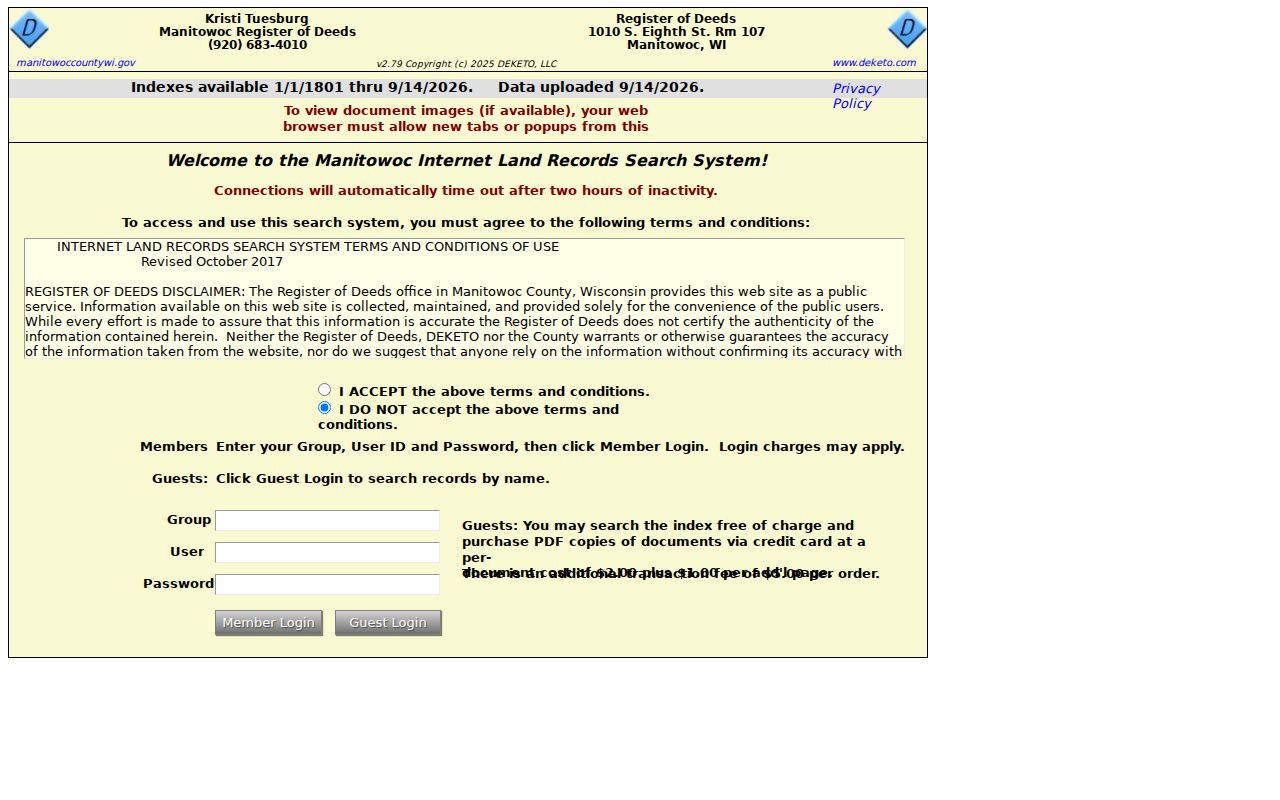
An index result only points to the instrument; the recorded deed itself carries the transfer text and the parcel description.
Walking Back the Manitowoc Deed Chain
Work from the newest transfer toward the oldest. The grantee in one deed becomes the grantor to test in the next. Chains break in ordinary ways. An estate, a trust, or a name change can hide a link. A parcel split or a misspelling can do the same. Record the instrument reference and legal description at every stage. Do not trust a name-only sequence.
- Locate the latest deed that fits the parcel and enter its date, grantee, grantor, and legal description in the chain table.
- Use the grantor from that deed as the next grantee to find how that party acquired the land.
- Compare the earlier deed’s land description and recording reference with the current parcel.
- Repeat the name-and-description check for each transfer, marking any probate or entity step.
- At the online cutoff, ask the Register of Deeds about the corresponding tract book or older volume.
- Grantor
- The party conveying the described interest.
- Grantee
- The party receiving that interest.
- Chain of title
- The ordered record of transfers affecting the described land.
- Legal description
- The land text that can remain useful after an address changes.
Older Manitowoc County Tract Records
The Register of Deeds links a separate Tract Index and Certified Survey Map viewer. Its scans cover older ownership clues. Tract books and CSMs also show land divisions and changes to lot layout. The office can confirm which volumes are online. Ask before assuming a particular book is available. For a split parcel or a rural description, start from the legal description on the newest deed. A recorded map explains how the land was divided. It may not match the current GIS tax polygon. Where the description changes, compare later conveyances and surveys. The county tract index and CSM viewer is the older-record route from the Register of Deeds. Its interface pairs map and book images.
A scan alone may not settle the transfer. Take the book or map reference to the Register of Deeds when the image runs short of detail.
Manitowoc Directories and House History
An older deed sometimes carries a street or family name nobody recognizes. Local directories can bridge that gap. Manitowoc Public Library holds city directories from 1868 to the present. Newspapers on microfilm reach back to the 1850s. Plat books, church records, census microfilm, and local indexes round out the collection. A directory entry may show an address, a spouse, an occupation, or a death notation. Check the actual entry, since coverage varies by year.
The library's digital history database adds a partial Name and Place Index, birth and death notices, obituaries, yearbooks, and Der Nord Westen selections. Its Proper Name Index began as a volunteer project in the 1970s. It moved online between 2010 and 2012. Search name variants and address-year pairs. Then return to the deed records to confirm ownership. The Manitowoc Public Library collection list organizes the digitized material.
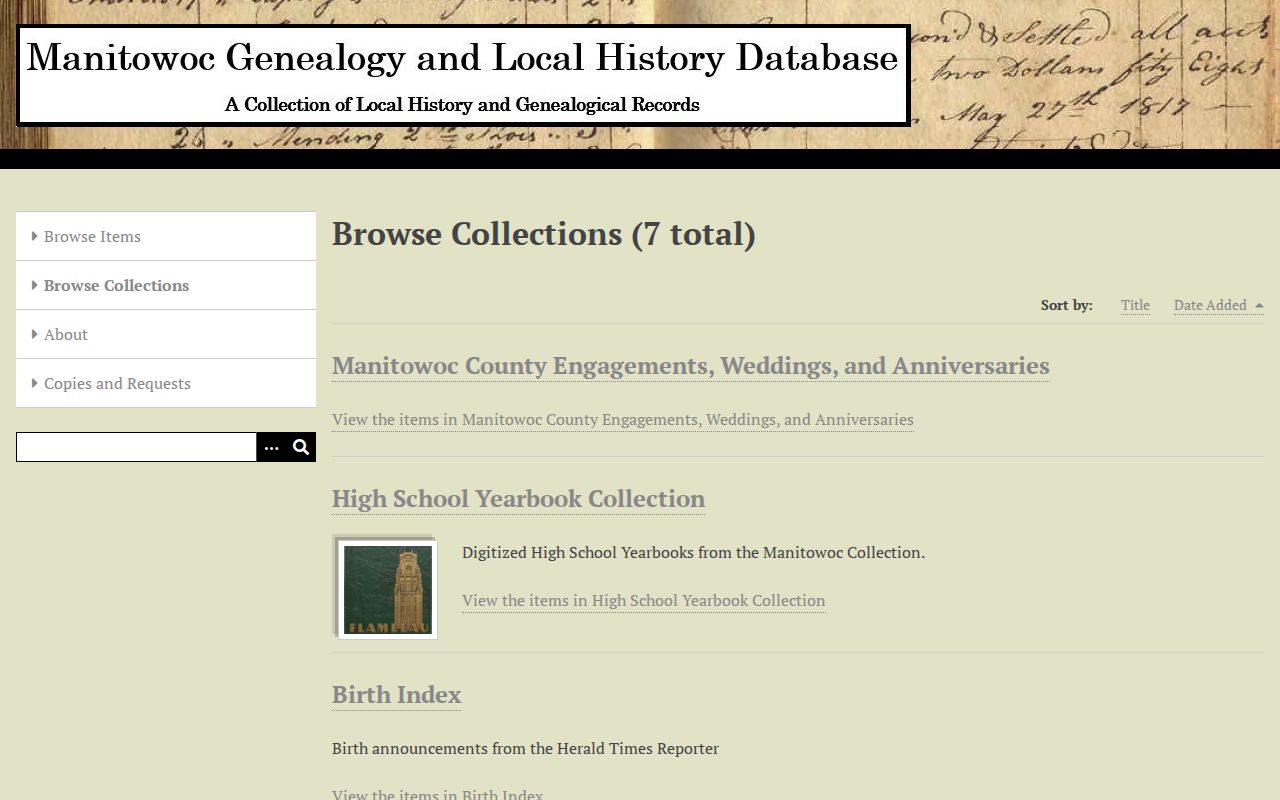
A directory entry is a lead. Only deed records prove that a person held title to a specific parcel.
Manitowoc County Historical Society Requests
The Manitowoc County Historical Society collection is searchable online. Staff will also research one person, family, or property on request. Send names, related people, dates, places, and the question you want answered. Turnaround runs two to four weeks. Nonmember research costs $15 per hour with a one-hour minimum. Copies are $1 black-and-white or $1.50 color. Treat these as archive research charges, separate from any deed-copy fee at the recorder.
A historical file can tie a parcel to photographs. It may also surface family papers or local events that never appear in the deed records. Use the catalog for leads, then cite the specific document in your notes. When the core question is who owned the land before you, test every archive lead against the deed chain. Do not treat a family story as proof of conveyance.
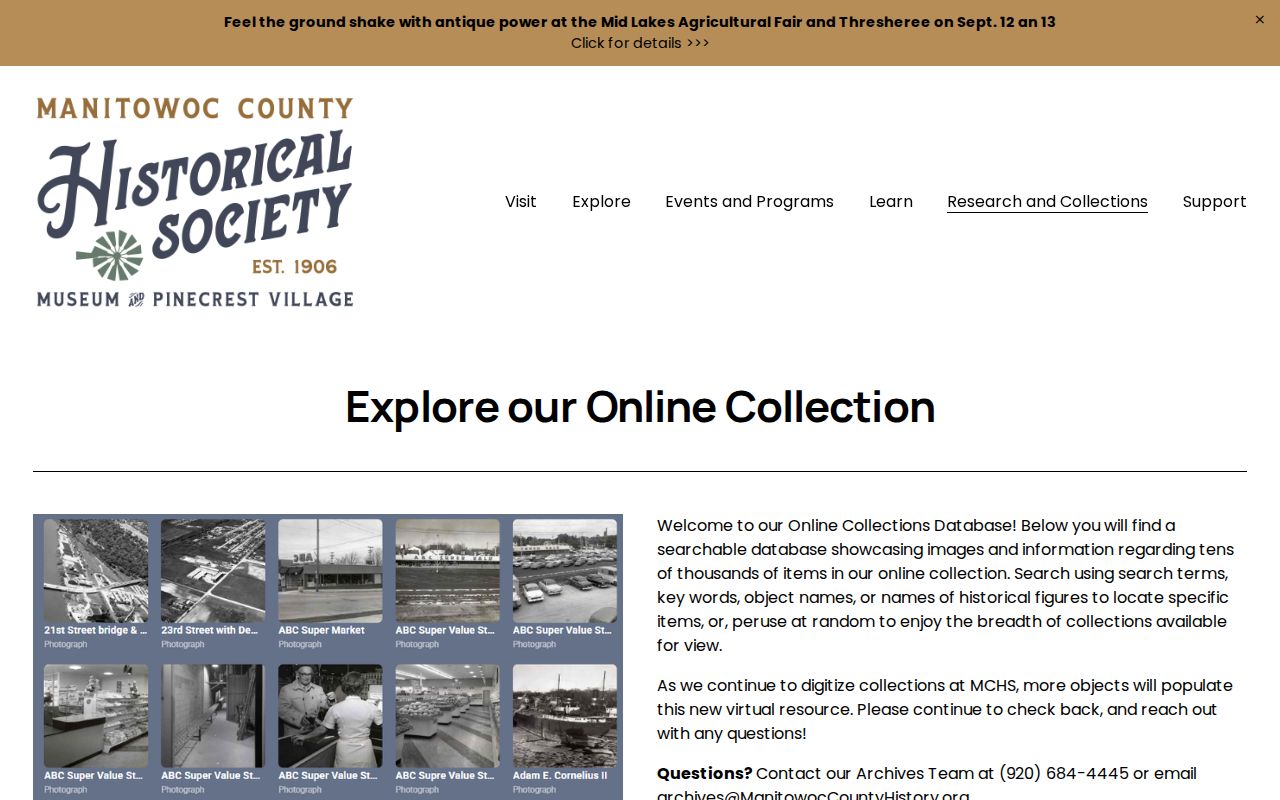
Pose one clear property question and allow the posted research time.
Probate Steps in Past Ownership
An owner's death can break the chain of title. Search WCCA for an estate case. Then ask the Register in Probate about public filings such as petitions, inventories, orders, and representative authority. The office sits in Room B-11 at the courthouse. Its public notice lists a $4 search fee. A will or probate order explains what happened. But the recorded deed stays the land instrument that proves the transfer.
Watch for a personal-representative deed, an executor deed, a transfer-on-death document, or a revocation. That matters when the grantee seems tied to the estate. A death certificate alone proves nothing about title. Carry the parcel description from the deed forward. That keeps the chain moving through the probate event.
The online index for Manitowoc County deeds starts on February 4, 1987. No courthouse fire or other record loss is confirmed, so no earlier cutoff applies here. For older material, ask the Register of Deeds which physical volumes cover the parcel. Ask also which tract records match its legal description. A library, plat book, or archive can help surface earlier owner names. It cannot fill a missing deed by guesswork.
How Far Back Manitowoc County Owners Reach
The online index for Manitowoc County deeds starts on February 4, 1987. No courthouse fire or other record loss is confirmed. So no earlier cutoff applies here. For older material, ask the Register of Deeds. Staff can say which physical volumes and tract records cover the parcel's legal description. A library, plat book, or archive can help surface earlier owner names. It cannot fill a missing deed by guesswork.
Lawful use. Former-owner research can support property diligence and house history. Do not use old records to stalk, threaten, harass, or harm a living person.